
Few life changes are as challenging as helping an aging parent navigate a major transition. Whether concerns involve health, safety, memory loss, home maintenance, or increasing care needs, adult children often find themselves stepping into a role they never expected to have.
One day, you're asking your parents for advice. The next, you're researching senior living options, reviewing legal documents, coordinating medical appointments, and helping make decisions about the future.
The process can feel overwhelming, especially when emotions, family dynamics, and financial considerations are all involved. The good news is that most successful senior transitions follow a similar path. Families who start planning early, build the right support system, and approach decisions methodically often experience less stress and achieve better outcomes.
This guide provides a roadmap for managing an aging parent's transition, including how to recognize when it's time to start planning, who should be involved, what financial and legal issues require attention, and how to support both your parent and yourself throughout the process.
Recognizing the Signs It's Time to Start Planning
One of the biggest misconceptions about senior transition planning is that it begins after a crisis. In reality, the best outcomes usually occur when families start planning before a major event forces immediate action.
A fall, hospitalization, medication error, or sudden decline in health can dramatically reduce the number of available options. Planning ahead allows families to make thoughtful decisions rather than rushed ones.
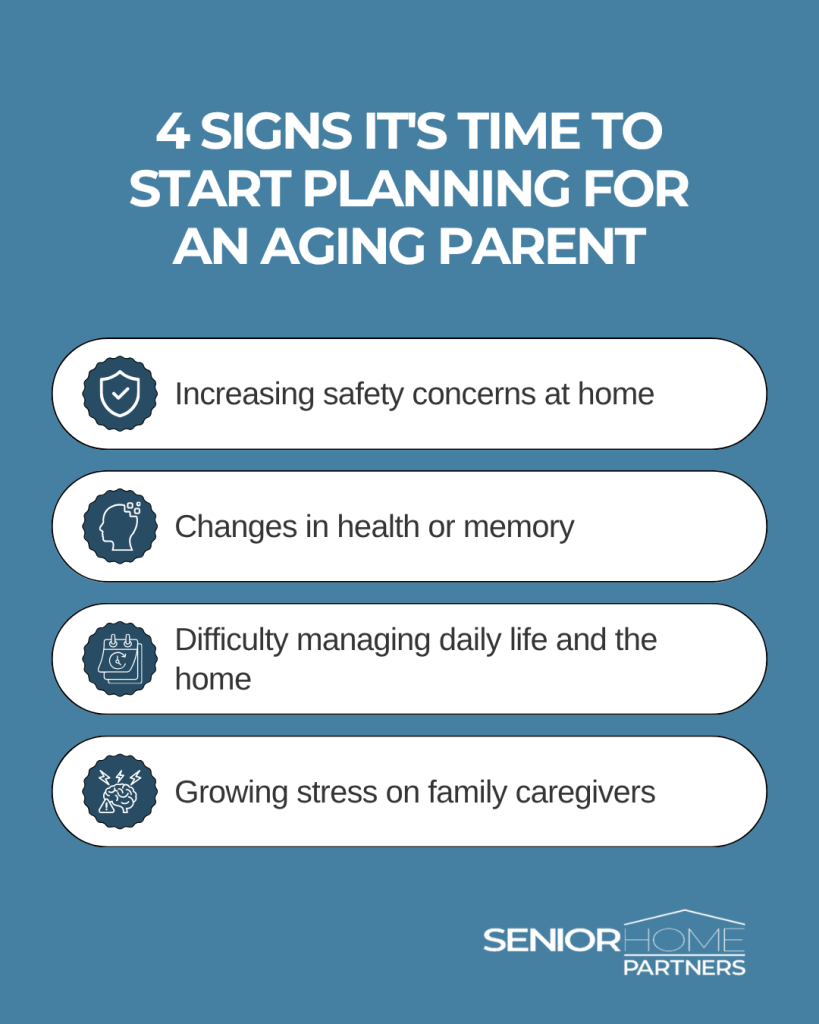
Several warning signs often indicate it's time to begin exploring future care and housing needs.
1. Safety Concerns
Safety issues are often the most obvious indicators that additional support may be needed. Frequent falls, mobility limitations, driving concerns, or medication management mistakes can signal that living independently is becoming more challenging.
While a single incident may not require immediate action, recurring safety concerns should prompt a family discussion about future planning.
2. Health Changes
Changes in physical or cognitive health can significantly impact a senior's ability to live independently. Chronic illnesses may become more difficult to manage, hospital visits may become more frequent, or memory issues may begin affecting daily routines.
When health concerns start influencing everyday life, it's important to evaluate whether the current living situation remains the best fit.
3. Lifestyle Changes
Not every warning sign is medical. Social isolation, poor nutrition, difficulty keeping up with housekeeping, and neglected home maintenance can all indicate that additional support may be beneficial.
These changes are often gradual, making them easy to overlook until they become significant problems.
4. Caregiver Stress
Sometimes the clearest sign comes from family caregivers themselves. Adult children who feel overwhelmed, exhausted, or constantly worried may be providing more support than they realize.
When caregiving responsibilities begin affecting work, relationships, or personal well-being, it's often time to explore additional resources.
Building the Right Care Team
Many adult children attempt to manage everything themselves. While this instinct is understandable, senior transitions are rarely successful when one person carries the entire burden.
The most effective approach involves building a care team that combines family support with professional expertise.
A strong senior transition team often includes:
- Family members who provide support, oversight, and decision-making assistance
- Healthcare providers who evaluate medical needs and recommend appropriate care
- Financial professionals who help assess affordability and long-term planning strategies
- Estate planning attorneys who ensure legal protections are in place
- Senior living advisors who help compare housing and care options
- Transition specialists who coordinate downsizing, moving, and logistics
Each member of the team brings a different perspective, helping families make more informed decisions and avoid unnecessary stress.
Managing Sibling Relationships During the Transition
Even close families can experience conflict during a parent's transition.
Adult children often have different opinions about care needs, financial priorities, housing options, and family responsibilities. In many situations, one sibling becomes the primary caregiver while others participate less frequently, creating resentment and frustration.
Some of the most common sources of sibling conflict include:
- Unequal caregiving responsibilities
- Disagreements about care needs
- Financial concerns
- Different opinions about housing options
- Inheritance and estate planning issues
- Lack of communication among family members
The key to minimizing conflict is proactive communication. Families should discuss concerns early, establish clear roles and responsibilities, and document major decisions whenever possible.
Successful families often follow a few simple principles:
- Communicate early and often
- Assign clear responsibilities
- Keep everyone informed
- Document important decisions
- Focus on the parent's needs rather than personal preferences
When disagreements arise, returning to the shared goal of protecting a parent's health, safety, and quality of life can help keep discussions productive.
Understanding the Financial Side of a Senior Transition
Financial planning is one of the most important—and often most overlooked—aspects of a senior transition.
Before evaluating care options, families should gain a clear understanding of available resources. This includes reviewing income sources, retirement accounts, investments, insurance coverage, home equity, and existing financial obligations.
A complete financial review should include:
- Retirement income
- Social Security benefits
- Savings and investments
- Long-term care insurance
- Home equity
- Existing debts and obligations
- Healthcare expenses
Many families focus solely on monthly senior living costs without considering additional expenses such as moving services, downsizing assistance, home repairs, storage, legal fees, and healthcare costs.
Common transition-related expenses include:
- Moving and packing services
- Home repairs and preparation
- Storage units
- Estate sale services
- Legal and tax planning fees
- Medical equipment and healthcare costs
Creating a comprehensive financial plan helps families understand what is affordable today while preparing for future care needs that may arise over time.
The goal is not simply finding the least expensive option. It's identifying a solution that remains financially sustainable while supporting a loved one's quality of life.
Legal Planning: Protecting Your Parent and Family
Legal planning is easiest when completed before a crisis occurs.
Unfortunately, many families postpone these conversations until a medical emergency forces immediate decisions.
Every family should review essential documents such as:
- Financial Power of Attorney
- Healthcare Power of Attorney
- Advance Healthcare Directives
- HIPAA authorizations
- Wills
- Trusts
- Beneficiary designations
These documents ensure that important decisions can be made efficiently and according to a parent's wishes if they become unable to make those decisions independently.
Addressing legal matters early can help families:
- Avoid court involvement
- Prevent decision-making delays
- Reduce family conflict
- Protect assets
- Ensure healthcare wishes are honored
Proactive planning reduces uncertainty and protects both seniors and their families from unnecessary complications later.
Understanding Housing and Care Options
One of the most challenging aspects of senior transition planning is understanding the wide range of available housing and care options.
Many families assume there are only two choices: remain at home or move into assisted living. In reality, there is an entire continuum of care designed to meet different needs.
Common senior care options include:
- Aging in Place with home care support
- Independent Living for active seniors seeking convenience and community
- Assisted Living for seniors needing help with daily activities
- Memory Care for individuals living with dementia
- Adult Family Homes offering personalized care in smaller residential settings
The right solution depends on several factors, including:
- Health status
- Mobility needs
- Cognitive function
- Social preferences
- Financial resources
- Family involvement
- Future care expectations
Rather than searching for the "best" option, families should focus on finding the most appropriate fit for their parent's unique circumstances.
Communication: The Skill That Makes Everything Easier
No amount of planning can eliminate difficult conversations.
Many adult children struggle with how to discuss future care needs, housing options, or declining independence with a parent who may be resistant to change.
The most productive conversations typically involve:
- Listening before offering solutions
- Asking questions instead of making demands
- Respecting independence
- Acknowledging fears and concerns
- Focusing on goals rather than limitations
Successful families also recognize that these discussions rarely happen in a single conversation. Major decisions often require multiple discussions over weeks or months as parents process information and become comfortable with potential changes.
When holding family meetings, focus on:
- Shared goals
- Clear communication
- Defined responsibilities
- Action steps
- Follow-up plans
These simple practices help reduce confusion and conflict throughout the transition process.
Don't Forget Self-Care
Supporting an aging parent is emotionally demanding, and many caregivers neglect their own well-being in the process.
Stress, anxiety, guilt, sleep disruption, and burnout are common among family caregivers. Unfortunately, these challenges often go unaddressed because caregivers are focused on everyone else's needs.
Common signs of caregiver burnout include:
- Constant exhaustion
- Difficulty sleeping
- Increased irritability
- Anxiety or depression
- Feeling overwhelmed
- Neglecting personal health
Taking care of yourself is not selfish. It's essential.
Healthy ways to protect yourself include:
- Asking family members for help
- Sharing responsibilities
- Scheduling regular breaks
- Maintaining social connections
- Joining caregiver support groups
- Seeking professional guidance when needed
Remember that no family handles every aspect of a senior transition perfectly. Progress matters more than perfection.
Common Mistakes Adult Children Make
While every family's journey is unique, several mistakes occur repeatedly.
The most common mistakes include:
- Waiting for a crisis before planning
- Trying to handle everything alone
- Delaying important legal planning
- Ignoring future care needs
- Avoiding difficult conversations
- Failing to involve siblings early
- Underestimating transition costs
Recognizing these common pitfalls can help families make more thoughtful decisions and create a smoother transition experience.
The earlier families begin planning, the more options they typically have—and the less stressful the transition becomes for everyone involved.
Aging Parent Transition Checklist
As you begin planning, consider these important first steps:
- Assess current safety and care needs
- Review finances and available resources
- Update legal and estate planning documents
- Explore housing and care options
- Build a professional support team
- Begin downsizing conversations
- Schedule family planning meetings
- Create a realistic transition timeline
Conclusion
Managing an aging parent's transition is rarely simple, but it doesn't have to be overwhelming. Families who start planning early, build the right support system, address financial and legal considerations, and maintain open communication are better positioned to make confident decisions when the time comes.
The goal is not simply to respond to today's challenges. It's to create a thoughtful, long-term plan that supports your parent's safety, dignity, independence, and quality of life while reducing stress for the entire family. With the right guidance and preparation, a senior transition can become less about crisis management and more about creating a successful next chapter for everyone involved.
Frequently Asked Questions
The best time to start planning is before a crisis occurs. If you're noticing safety concerns, health changes, social isolation, difficulty managing a home, or increasing caregiving responsibilities, it's worth starting the conversation now. Early planning gives families more options and reduces the pressure of making urgent decisions later.
Open communication is key. Families can minimize disagreements by involving siblings early, defining roles and responsibilities, sharing important information, and focusing on the parent's needs rather than personal preferences. Regular family discussions and documented decisions often help prevent misunderstandings and resentment.
A successful transition starts with creating a comprehensive plan. This includes evaluating care needs, reviewing finances, updating legal documents, exploring housing options, and building a support team. Families who take a proactive, organized approach are often better prepared to make informed decisions and navigate changes with greater confidence.