
As our loved ones grow older, their needs change, and the spaces they live in should adapt with them. Enhancing your parent’s home is about more than aesthetics or resale value, it’s about safety, comfort, accessibility, and dignity. Thoughtful updates can make daily living easier, reduce risks, and help your parent feel secure and at home. At the same time, certain renovations can improve the property’s appeal for future buyers, creating a balance between livability and value.
This guide walks you through practical steps, safety enhancements, and long-term considerations for improving your aging parent’s home.
Flooring Upgrades: Durable, Safe, and Beautiful
Renovations for seniors should address four main areas: safety, functionality, comfort, and long-term value. Each improvement should reflect your parent’s current needs while anticipating what will make daily life easier as time goes on.

Flooring is one of the most impactful improvements you can make, both for safety and aesthetic appeal. Old carpets or worn linoleum can pose tripping hazards, accumulate allergens, and appear dated.
Consider these options:
- Hardwood Floors: Timeless, durable, and easy to clean, hardwood adds warmth and elegance. Its smooth surface reduces dust accumulation and simplifies maintenance, which can be particularly helpful for seniors.
- Luxury Vinyl Plank (LVP): LVP mimics natural wood or stone while offering water resistance and slip-resistance, making it ideal for kitchens and bathrooms. It’s affordable, durable, and low maintenance.
Why it matters: Flooring that is safe, easy to maintain, and visually appealing enhances your parent’s daily comfort while adding value to the home for potential buyers.
Bathroom Safety: Walk-In Showers and Comfort Features

Bathrooms are high-risk areas for slips and falls. Updating them for safety and ease of use can dramatically improve quality of life.
Practical updates:
- Walk-In Showers: Replace traditional tubs with walk-in designs to eliminate high steps and reduce tripping hazards. Include a built-in bench for resting if needed.
- Grab Bars: Strategically placed bars near showers, tubs, and toilets provide stability and confidence.
- Comfort Height Toilets: These taller toilets reduce strain on knees and hips, making daily routines easier.
- Lever-Handled Faucets: Easy to operate for individuals with reduced grip strength or arthritis.
Optional enhancements: Consider zero-entry showers if wheelchair access may be required in the future. These updates prioritize safety, convenience, and long-term usability without creating unnecessary costs.
Long-Term Value and Energy Efficiency

When investing in home improvements, think beyond the immediate benefits. Upgrades that increase comfort and energy efficiency can save money and add appeal for future buyers.
Key considerations:
- Enhanced Insulation: Keeps rooms warm in winter, cool in summer, and can reduce utility bills. Seniors often feel temperature fluctuations more acutely, making insulation an important comfort factor.
- Energy-Efficient Windows: Reduce drafts, improve indoor temperature consistency, and cut energy costs. They also minimize outside noise, enhancing peace and comfort.
- Modern Appliances: Energy-efficient, user-friendly appliances simplify daily tasks. Features like bottom-freezer refrigerators, adjustable dishwasher racks, and front-loading washing machines can make routines easier for seniors.
Why it matters: Energy-efficient and modern upgrades improve livability now while boosting resale value later. They also demonstrate care for your parent’s comfort, safety, and financial wellbeing.
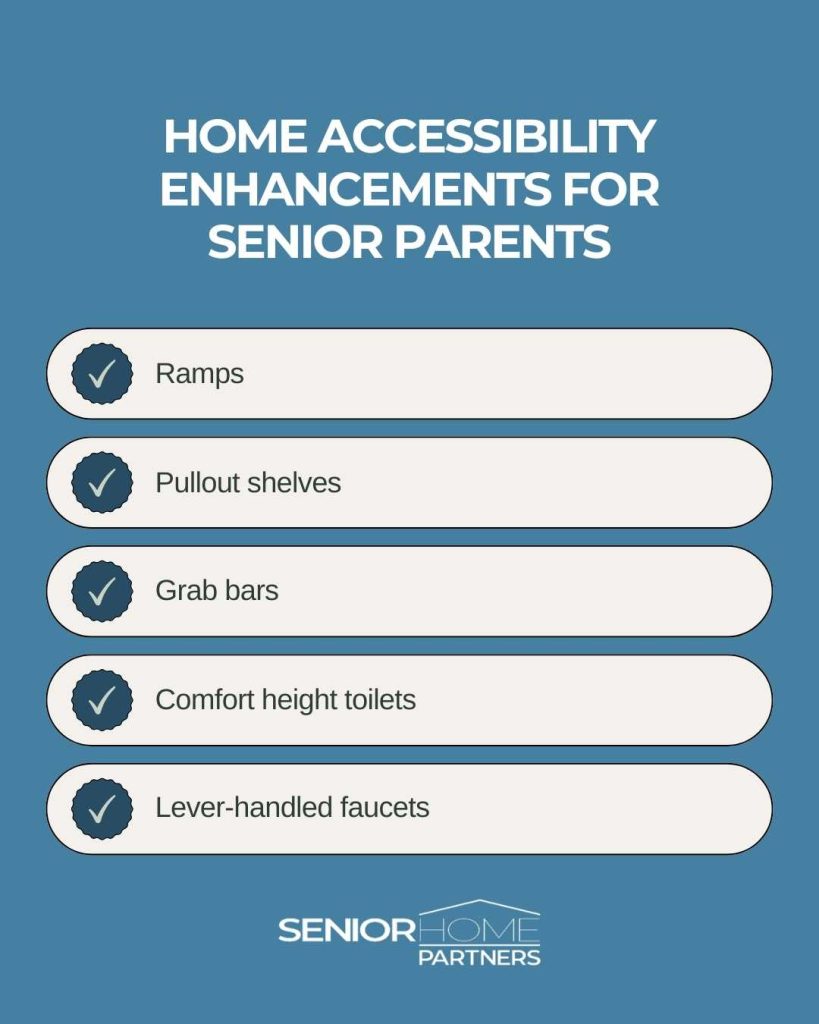
Home Accessibility Enhancements for Senior Parents: Promoting Independence and Safety

Small, thoughtful modifications can make a big difference in a parent’s independence and confidence.
Simple, effective updates include:
- Ramps: Provide safe entry for parents using walkers, canes, or wheelchairs.
- Pullout Shelves: Reduce bending and reaching in kitchens, pantries, and closets.
- Grab Bars: Reinforce stability in bathrooms and other high-risk areas.
- Comfort Height Toilets and Lever-Handled Faucets: Minimize physical strain during daily routines.
The goal: These changes create a home environment that allows your parent to maintain independence and dignity while staying safe and comfortable.
Balancing Value and Livability
It’s important to find a balance between improvements that enhance your parent’s quality of life and those that increase the property’s resale value. Not every change needs to be expensive. Sometimes small, practical updates like grab bars, lighting improvements, or non-slip flooring, offer the most immediate benefit while still adding appeal for future buyers.
Consider your parent’s timeline: Will they remain in the home long-term, or is it likely to be sold within a few years? Planning renovations with a five-year perspective ensures your investments are used effectively while addressing current needs.
Final Thoughts
Enhancing your parent’s home is an act of care, respect, and foresight. Each decision, flooring, bathroom modifications, energy upgrades, accessibility improvements, supports their safety, independence, and comfort. At the same time, thoughtful updates can help preserve the home’s value and appeal for potential buyers when the time comes to sell.
Where to Find Experienced Real Estate Agents for Selling Homes of Elderly Parents in Puget Sound?

If you're seeking professional assistance in selling homes for elderly parents in the Puget Sound, you'll want to collaborate with real estate experts who understand the unique needs and challenges of this important transition.
Team Ray & Company: Your Trusted Real Estate Partners
When it comes to selling homes for elderly parents, Team Ray & Co. is a standout choice in Puget Sound. With their wealth of experience and dedication to personalized service, they can help guide you through this process with compassion and expertise.
Whether you're navigating the taxing process of enhancing the home for your aging parent or looking for practical advice on pricing and marketing their home, Team Ray & Co. can provide the support you need. Their commitment to understanding your family's unique circumstances ensures that your parent's home is marketed effectively to potential buyers who appreciate its value and history.
Why Team Ray & Company?
- Worried about selling your house for less than it's worth? They're committed to helping you achieve the value your parent's home deserves.
- Concerned about being taken advantage of? Team Ray & Co. prioritizes your interests and ensures a transparent process.
- Overwhelmed with the idea of remodeling? They can guide you through the options, from as-is sales to strategic updates.
- Unsure about what actions to take? Team Ray & Co. provides step-by-step guidance tailored to your situation.
- Unclear about who to trust? With Team Ray & Co., you'll work with professionals who have a track record of integrity and support.
To learn more about how Team Ray & Co. can assist you in selling your elderly parent's home or contact them directly at (253) 282-0783.
Senior Home Partners: Addressing Your Concerns, Delivering Solutions
If you have concerns about selling your parent's home, consider reaching out to Senior Home Partners – Education and Referral based company. They understand the challenges that come with this process and offer solutions that address your unique needs. Contact them at (253)215-9070.
Thinking about a move or navigating a transition for your loved one? You don’t have to figure this out on your own. We have the resources, local insight, and trusted network to help you find the right fit—whether you’re just starting to explore or need support right away. Share your details below, and Ranny will personally reach out to guide you through your options and next steps.
Frequently Asked Questions
Helping elderly parents at home begins with assessing their physical, emotional, and social needs. Start by ensuring their environment is safe and accessible, adding support like grab bars, non-slip rugs, and adequate lighting. Assist with daily tasks such as meal preparation, medication management, and transportation while respecting their independence. Encourage social engagement and regular check-ins to prevent isolation. Professional support, including in-home caregivers, senior move managers, or occupational therapists, can make the process more manageable and ensure your parents’ well-being.
The eight key needs of elderly adults often include: physical safety, health care access, nutrition, social interaction, cognitive stimulation, emotional support, meaningful activity or purpose, and a comfortable living environment. Meeting these needs holistically supports both their quality of life and long-term independence, whether at home or in a supportive living arrangement.
Convincing elderly parents they need help requires empathy and patience. Start by framing assistance as a way to maintain independence and improve safety, rather than a loss of autonomy. Use specific examples of challenges they face, such as difficulty with stairs or medication management. Offer choices and involve them in decisions about what help looks like. Listening to their fears and validating their emotions can ease resistance and foster collaboration.
Aging in place means living in one’s own home safely and comfortably as one grows older. This approach prioritizes independence, familiar surroundings, and continuity of lifestyle while adjusting the environment to meet changing needs. Aging in place allows elderly adults to remain connected to their community and daily routines.
Aging in place home modifications involve making a home safer and more accessible for seniors. Common adjustments include installing grab bars and handrails, adding ramps, widening doorways for mobility aids, updating bathrooms with walk-in showers, improving lighting, and reducing trip hazards. These changes help seniors move safely, maintain independence, and prevent accidents.
Aging in place communities are residential areas or housing developments designed to support seniors in living independently while providing access to support services as needed. These communities often include amenities such as on-site healthcare, social activities, accessible design features, and emergency response systems, enabling residents to remain at home longer without sacrificing safety or quality of life.