
Knowing when assisted living is the right choice for a loved one can feel overwhelming. The decision often carries emotional weight, practical considerations, and even family tension. Yet, recognizing the signs early and approaching the transition thoughtfully can make the process smoother for both your parent and your family.
Here’s a compassionate roadmap to help you identify the right time and support your parent through this important life change.
Key Signs Assisted Living May Be Needed

Recognizing the signs that your parent may benefit from assisted living isn’t always easy. It’s a combination of practical observations, emotional awareness, and an understanding of their daily challenges. Paying attention to these key areas can help you make a thoughtful, compassionate decision.
Physical Limitations
As we age, even routine tasks can start to feel like mountains. Bathing, dressing, cooking, or taking medications may gradually become more difficult for your loved one. They may tire easily, forget steps in their daily routine, or struggle with mobility. Assisted living communities are designed to provide support where it’s needed most while still encouraging independence. Residents can receive help with daily tasks, yet maintain autonomy in how they structure their day. This balance allows your parent to live safely without feeling like they’ve lost control of their life.
Cognitive or Emotional Changes
Changes in memory, attention, or mood can be subtle at first but can significantly affect day-to-day life. Forgetting appointments, misplacing items, or becoming more easily frustrated can indicate that additional support is needed. Assisted living communities often offer programs tailored to cognitive health, memory care, and emotional well-being. Having professionals available to monitor changes and provide interventions not only eases your parent’s stress but also gives you peace of mind that they are supported in a safe environment.
Social Isolation
Loneliness is often underestimated but can have a profound impact on health and happiness. If your parent rarely sees friends, avoids social gatherings, or spends most of the day alone, this can quietly erode emotional well-being. Assisted living communities are built around connection, with group activities, shared meals, hobby clubs, and outings that encourage social interaction. Being part of a community can restore a sense of purpose, spark joy, and help your parent build friendships that brighten everyday life.
Caregiver Stress
Caring for a loved one at home is an act of devotion, but it can also be exhausting. Balancing your own responsibilities, work, and family while providing care can take a toll physically, mentally, and emotionally. If you find yourself stretched too thin, stressed, or constantly worried about your parent’s safety, it may be time to consider assisted living. Moving your loved one to a supportive environment ensures they receive consistent care while relieving some of the pressures on you. It allows you to focus on quality time and emotional support rather than constant caregiving duties.
The Power of a Third-Party Opinion

Making the decision to transition a parent to assisted living can feel overwhelming. Emotions, attachments, and a sense of responsibility often make it hard to see the situation clearly. That’s where third-party healthcare experts can be invaluable. Their guidance brings clarity, reassurance, and an objective perspective to support both you and your parent.
- Primary Care Physicians
- They provide a comprehensive view of your parent’s overall health.
- Can identify medical concerns that may make daily tasks more difficult or risky at home.
- Serve as a trusted starting point for conversations about next steps.
- Geriatric Specialists
- Focus specifically on aging-related challenges.
- Evaluate cognitive health, mobility, nutrition, and medication management.
- Help determine whether your parent’s needs are best met at home or in a supportive community.
- Mental Health Professionals
- Address changes in mood, anxiety, or cognitive function.
- Provide strategies for coping with emotional challenges and transitions.
- Offer reassurance to both seniors and family members during a potentially stressful process.
- Physical Therapists
- Assess mobility, balance, and fall risk.
- Suggest modifications or interventions to make the home safer.
- Their insights can highlight whether daily living at home remains feasible or if assisted living would offer better support.
- Social Workers
- Evaluate social connections and engagement.
- Identify opportunities for community involvement or enrichment programs.
- Help families coordinate resources to maintain emotional and social well-being.
These professionals do more than just evaluate your parent’s health, they provide a neutral, compassionate perspective that allows conversations to feel informed rather than judgmental. Their guidance can be the bridge between uncertainty and confidence, helping you make choices that honor your parent’s dignity, independence, and quality of life.
Starting the Conversation with Your Parent

Talking about assisted living can feel daunting, but the right approach turns it into a compassionate dialogue rather than a confrontation. Open, honest, and empathetic communication is the foundation. Approach the conversation with respect and genuine curiosity about your parent’s feelings and needs.
Some questions to guide the discussion:
- Would you like regular calls or visits from family and friends?
- This helps gauge how much social interaction feels comfortable and enjoyable.
- Understanding their preferences ensures they feel in control of their connections.
- How often would you like these interactions?
- Daily, weekly, or monthly? Knowing their ideal rhythm helps you design a support system that feels natural.
- Are there specific activities or outings you would enjoy?
- Hobbies, social clubs, or cultural events can be incorporated into their routine.
- Involving your parent in planning reinforces autonomy and choice.
As you ask these questions, emphasize that assisted living is about enhancing life, not taking away independence. Highlight the opportunities for connection, meaningful activities, and support with everyday tasks, while still allowing them to maintain personal freedom.
Active listening is key. Validate their emotions, acknowledge fears, and respond with reassurance. Even if your parent initially resists the idea, a conversation grounded in empathy and respect builds trust and lays the groundwork for a smoother transition when the time comes.
Remember, the goal is not to convince but to collaborate. Your parent’s voice should guide the decision, and your role is to provide information, support, and reassurance every step of the way.
Overcoming Resistance with Care

Resistance is natural and expected. Leaving a home filled with memories can feel overwhelming, and your parent’s hesitation is often rooted in fear of change, loss of independence, or the unknown. Approach this transition with patience, empathy, and reassurance.
Here are ways to navigate it thoughtfully:
- Highlight Independence
- Emphasize that assisted living is designed to support daily life, not take control away.
- Point out that help with meals, medications, or chores actually frees them to focus on hobbies, social activities, and meaningful connections.
- Reinforce that autonomy and choice remain central to their daily routine.
- Honor Sentimental Attachments
- Encourage bringing cherished belongings, photos, or furniture to personalize their new space.
- A familiar environment reduces anxiety and helps your parent feel at home quickly.
- Respecting these attachments validates their sense of identity and comfort.
- Demystify the Experience
- Arrange visits to multiple communities so they can see what daily life would look like.
- Introduce them to staff and residents, allowing for firsthand interactions that feel genuine and reassuring.
- Use input from healthcare professionals or placement specialists to highlight tangible benefits, offering an informed perspective without pressure.
Every conversation is an opportunity to listen, validate, and reassure. By approaching resistance with care, empathy, and transparency, you help your parent feel confident that this transition is about living better, not leaving behind.
Finding the Right Community: 2 Paths

Choosing an assisted living community is a deeply personal decision, and finding the right fit can make all the difference in your parent’s comfort, independence, and happiness. There are two main paths to consider, and both can lead to a successful placement when approached thoughtfully.
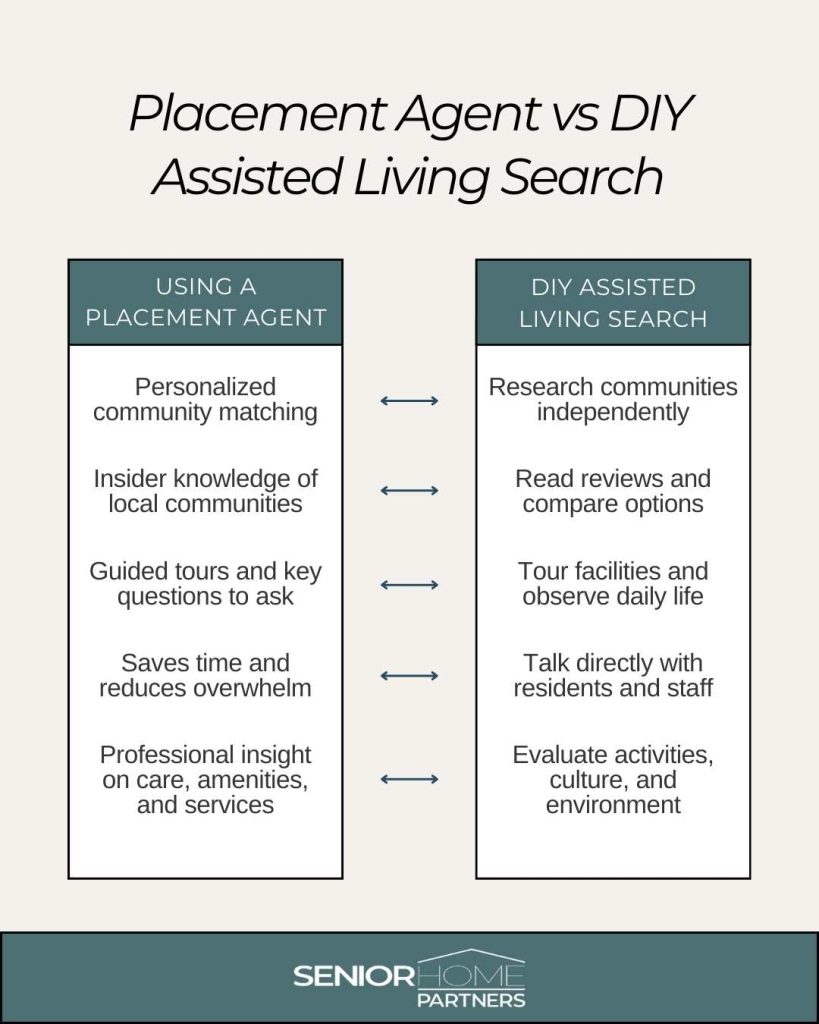
Path 1: Using a Placement Agent
A placement agent can be an invaluable ally, especially if the process feels overwhelming or you’re juggling multiple responsibilities. These professionals have insider knowledge of local communities and understand the nuances of services, staff quality, and resident culture.
- Tailored Matching: They assess your parent’s needs, preferences, and lifestyle to narrow options to communities that fit best.
- Guided Tours: Placement agents accompany you on visits, helping you ask the right questions and notice key details you might miss.
- Expert Advice: From amenities to social programs to healthcare offerings, they provide insight that can save you time and stress.
Using a placement agent doesn’t remove your involvement—it enhances it. You still make the final choice, but with expert guidance and confidence.
Path 2: DIY Approach
If you prefer a hands-on approach, the DIY path allows you to explore and evaluate communities directly. While it requires more time and energy, it can give you a sense of personal connection and control.
- Research: Start with online directories, reviews, and recommendations from healthcare professionals or trusted sources. Take note of licensing, ratings, and specialized programs.
- Visit Communities: Walk through the facilities, observe daily life, and get a feel for the atmosphere and energy. Notice how residents interact with staff and one another.
- Check Activities: Look for programs that align with your parent’s hobbies and social interests. Active engagement can dramatically improve quality of life.
- Talk to Residents: Conversations with current residents offer insights into day-to-day life that brochures cannot capture. Ask about their experiences with staff, meals, and social events.
- Assess Staff: Observe attentiveness, empathy, and how staff members engage with residents. A supportive, friendly team is central to a thriving community.
Choosing What Works Best
Both approaches can be effective. The choice depends on your comfort level, available time, and your parent’s specific needs. Some families combine both paths: they start with a placement agent for guidance, then do personal visits to ensure a good fit.
The ultimate goal is simple: find a community where your parent feels safe, valued, and genuinely at home, with access to support, social engagement, and a sense of independence.
Conclusion
Recognizing when your parent may need assisted living is an important step toward care that balances safety, independence, and emotional well-being. This journey can feel daunting, but approaching it with patience, empathy, and clear information transforms it into an opportunity to enhance your loved one’s life.
Consulting healthcare professionals, having open and honest conversations, and exploring communities thoughtfully allows you to make decisions that are informed and compassionate. Each step you take, from visiting facilities to listening to your parent’s preferences, helps create a transition that feels empowering rather than overwhelming.
Remember, assisted living is not about giving up or losing independence. It’s about embracing a lifestyle where your parent can thrive, surrounded by care, social engagement, and opportunities that nurture body, mind, and spirit. Every call, visit, and small gesture builds a sense of support and belonging that can profoundly improve quality of life.
By taking these steps, you’re not only helping your parent feel valued and connected, you’re creating a foundation of peace and confidence for yourself as a caregiver. Thoughtful action today paves the way for dignity, joy, and meaningful connection in the days ahead.
Where to Find Experienced Real Estate Agents for Selling Homes of Elderly Parents in Puget Sound?
Team Ray & Company: Your Trusted Real Estate Partners
When it comes to selling homes for elderly parents, Team Ray & Co. is a standout choice in Puget Sound. With their wealth of experience and dedication to personalized service, they can help guide you through this process with compassion and expertise.
Whether you're navigating the emotional aspects of downsizing or looking for practical advice on pricing and marketing your parent's home, Team Ray & Co. can provide the support you need. Their commitment to understanding your family's unique circumstances ensures that your parent's home is marketed effectively to potential buyers who appreciate its value and history.
Why Team Ray & Company?
- Are you worried about selling your house for less than it's worth? They're committed to helping you achieve the value your parent's home deserves.
- Concerned about being taken advantage of? Team Ray & Co. prioritizes your interests and ensures a transparent process.
- Overwhelmed with the idea of remodeling? They can guide you through the options, from as-is sales to strategic updates.
- Unsure about what actions to take? Team Ray & Co. provides step-by-step guidance tailored to your situation.
- Unclear about who to trust? With Team Ray & Co., you'll work with professionals who have a track record of integrity and support.
To learn more about how Team Ray & Co. can assist you in selling your elderly parent's home or contact them directly at (253) 282-0783.
Senior Home Partners: Addressing Your Concerns, Delivering Solutions
If you have concerns about selling your parent's home, consider reaching out to Senior Home Partners – Education and Referral based company. They understand the challenges that come with this process and offer solutions that address your unique needs. Contact them at (253)215-9070.
Thinking about a move or navigating a transition for your loved one? You don’t have to figure this out on your own. We have the resources, local insight, and trusted network to help you find the right fit—whether you’re just starting to explore or need support right away. Share your details below, and Ranny will personally reach out to guide you through your options and next steps.
Frequently Asked Questions
Transitioning to assisted living can feel overwhelming for both you and your parent. The key is preparation, empathy, and clear communication. Start by assessing their physical, cognitive, and emotional needs to identify the level of support required. Involve them in choosing a community, touring facilities, and personalizing their new space. Gradually introduce the idea, highlight the social opportunities, and emphasize that assisted living is about enhancing independence, safety, and quality of life. Building a supportive network of family, friends, and professionals can make the transition smoother and more reassuring.
Approach the conversation with compassion, patience, and respect for their feelings. Begin by listening to their concerns and validating their emotions. Explain that assisted living is meant to support their independence and safety, not take it away. Share the practical benefits, such as help with daily tasks, opportunities for social engagement, and access to healthcare support. Encourage visits to multiple communities so they can experience the environment and meet staff and residents. Framing the move as a positive step rather than a loss reduces resistance and builds trust.
Understanding physical needs helps ensure your parent’s well-being and informs the type of assisted living support they may require. These needs generally include:
Nutrition: Access to balanced meals that meet dietary requirements.
Hydration: Ensuring adequate daily fluid intake.
Mobility: Assistance with walking, transferring, or exercise to maintain strength and prevent falls.
Personal Hygiene: Support with bathing, grooming, and toileting as needed.
Medication Management: Assistance with taking medications on time and correctly.
Sleep and Rest: Creating a safe, comfortable environment to maintain healthy sleep routines.
Health Monitoring: Regular check-ups and attention to chronic conditions, vision, and hearing.
Signs that your parent may need assistance often appear gradually. Look for changes in their ability to perform daily activities, like cooking, bathing, or managing medications. Cognitive shifts, such as memory loss, confusion, or mood changes, can indicate a need for support. Social isolation, frequent falls, missed appointments, or caregiver strain also signal that additional help may be necessary. Consulting healthcare professionals and observing patterns over time can provide clarity and help you make proactive, compassionate decisions.